
Planning a home cinema room is an exciting project, but there's quite a bit to think about before you start choosing screens and speakers.
The room itself, seating position, lighting, sound and equipment all play a part in how good the finished cinema will be. Get these things right from the beginning and you'll have a much better starting point than trying to work around problems once everything has been installed.
Whether you're converting a spare room, building a dedicated cinema or incorporating one into a new home, a little planning goes a long way.
Here's what to consider when planning a home cinema room from scratch.
Start with the room itself
Before buying any equipment, think about which room you're going to use and what you want from it. I know this seems a bit obvious, but stick with me..
A dedicated cinema room gives you more freedom to control the lighting, sound and layout. However, you can also create a great cinema experience in an existing living room or spare room, but you have to take into account acoustics a bit more potentially.
The size and shape of the room will influence decisions such as screen size, speaker placement and seating. You'll also need to consider windows, doors, ceiling height and where the equipment can be installed.
For example, a large screen might look impressive on paper, but if the seating is too close, it could become uncomfortable to watch. Equally, placing speakers without considering where people will sit can affect how the sound is experienced. Are you able to set things back into walls?
Thinking about these details early helps you make better decisions about the rest of the installation.
Choose the right screen
The screen is often the first thing people think about when planning a home cinema, but the biggest option isn't always the best one.
You could use a large television or opt for a projector and dedicated screen. The right choice depends on the room, viewing distance, available light and the type of experience you're looking for.
A television can work particularly well in a multi-purpose room that's also used during the day. A projector and screen may be more suitable if you're creating a dedicated cinema with a larger viewing area.
It's also worth considering where the screen will sit and how it will fit into the room. If you're building from scratch, this can influence the positioning of furniture, speakers, power sockets and cabling. Projectors can also be quite large, make sure you are aware of the dimensions of the kit you are considering.
Sound is just as important as the picture
A home cinema isn't all about having a large screen. Sound makes a huge difference to how immersive the experience feels.
The number and position of speakers will depend on the room and the system being installed. A surround sound setup needs to be planned around the seating position, with speakers placed to create the intended listening experience.
The room itself matters too. Hard surfaces can cause sound to reflect around the space, while furniture, carpets and other soft furnishings can affect how sound travels.
This doesn't mean you need to turn your room into a recording studio, but it's worth considering the acoustics when planning the layout and choosing equipment.
If you're building or renovating, it's also a good opportunity to run speaker cables before the walls and ceilings are finished. This gives you more flexibility over speaker placement and helps keep the finished room tidy.
Get the lighting right
Lighting can have a bigger impact on a cinema room than you might expect.
You want enough light to move around safely, find your seat and use the room comfortably, but you don't want glare or reflections distracting you from the screen.
Dimmable lighting is a useful starting point. You could have brighter lights when cleaning or getting ready to watch something, then lower them once the film starts.
With smart lighting, you can take this further by creating scenes that adjust several lights together. A cinema setting could dim the main lights, leave a little lighting around the edges of the room and prepare the space for watching a film.
If you're using a projector, controlling daylight is also important. Blackout blinds or curtains can help prevent sunlight from washing out the picture, particularly in rooms with large windows.
These details are much easier to plan when the room is being designed rather than added as an afterthought.
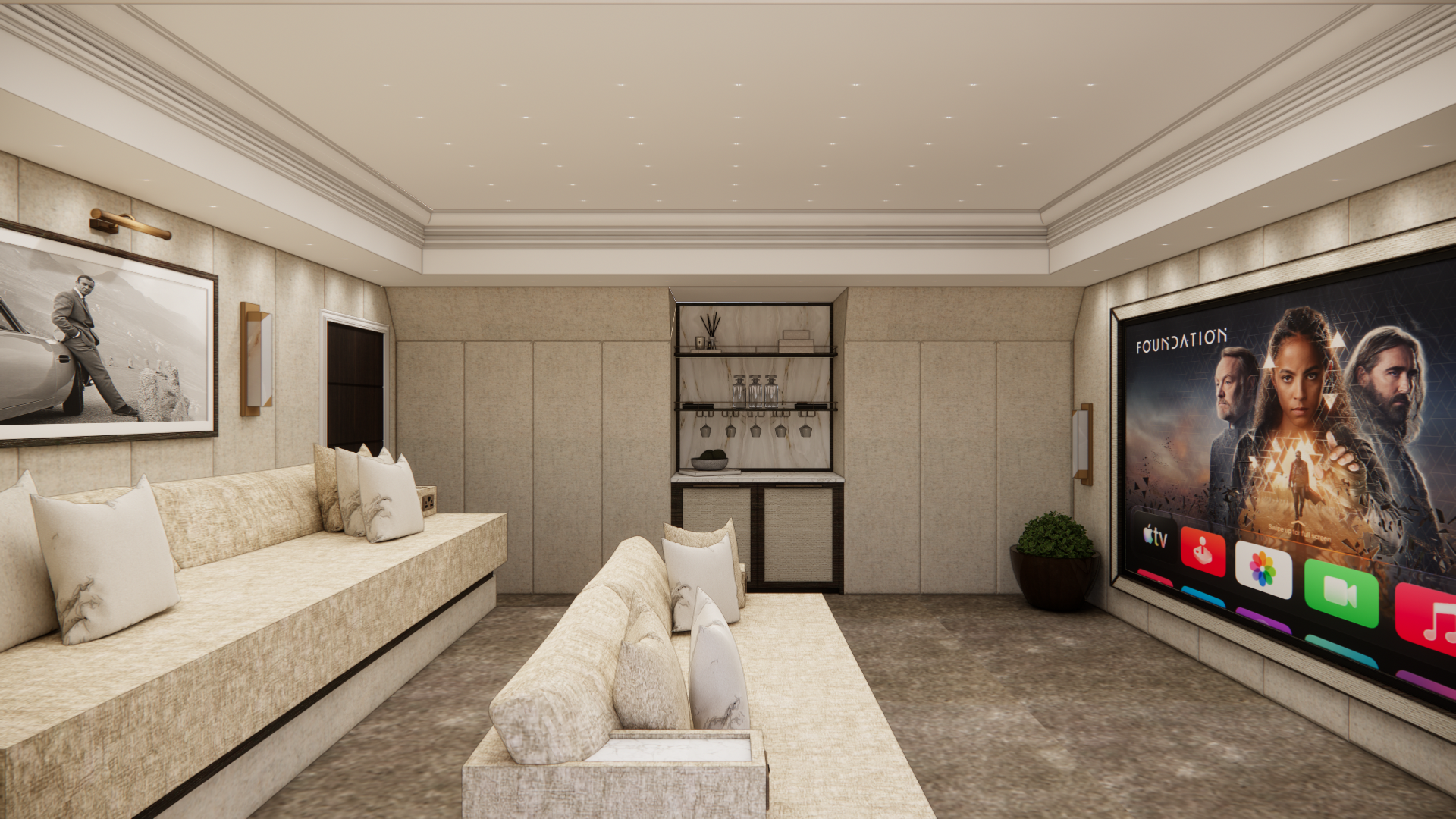
Think about seating and layout
It's easy to focus on the technology and forget that you'll be spending a lot of time sitting in the room.
Think about how many people will usually use the cinema and whether you want dedicated cinema seats, a large sofa or a combination of both.
You'll need enough space to move around comfortably, while keeping the seating at a suitable distance from the screen.
If you want multiple rows of seating, you'll need to consider sightlines so that everyone has a clear view. The height of the seats, screen position and any raised platforms should all be considered together.
It's worth planning where everything will go before buying furniture. Moving a sofa is easy enough, but changing the position of a large screen or relocating speakers once everything is installed can be a much bigger job.
Plan the cabling and equipment
One of the less exciting parts of home cinema room design is also one of the most important.
A cinema room can involve power supplies, network connections, speaker cables, HDMI connections and other wiring. You'll also need to decide where equipment such as amplifiers, streaming devices and other AV hardware will be located.
If you leave these decisions until the room is finished, you could end up with visible cables, awkward equipment positions or limited options for future upgrades.
Planning the cabling early means connections can be run through walls and ceilings where appropriate, keeping the finished room neat.
It also helps to think about access to the equipment. You don't want to have to dismantle furniture or remove panels every time something needs checking. Equipment also needs sufficient cooling and airflow from a safety point of view, so take this into account.
This is one area where getting advice from an experienced home cinema installer can be particularly useful. The equipment needs to work together, and the wiring and connections need to support the setup you've chosen.
Consider how you'll control everything
A cinema room can involve several different pieces of equipment, from the screen and sound system to lighting and blinds.
If each one has its own remote or control method, using the room can quickly become more complicated than it needs to be.
A system such as Control4 can bring compatible equipment together, allowing you to control multiple functions from one place.
For example, you could have a cinema scene that switches on the right equipment, sets the lighting and lowers the blinds. When you've finished watching, another setting could bring the room back to normal.
The exact options depend on the equipment installed, but planning control alongside the rest of the room helps everything work together.
Do you need a professional home cinema installer?
You can certainly research equipment and come up with ideas for your own cinema room. There are plenty of useful products and guides available.
The tricky part is making sure all the different elements work well together with no hiccups.
Screen size, viewing distance, speaker placement, acoustics, cabling, lighting and equipment compatibility all influence the finished result. It's easy to overlook something when you're choosing each component separately, particularly if you haven't planned a cinema installation before.
An experienced installer can help you work through these decisions, recommend suitable equipment and plan the installation around the room itself.
This can be especially helpful if you're building a new home or undertaking a renovation, when wiring and equipment locations need to be considered alongside the wider building work.
You don't need to know exactly what you want before speaking to someone. Having an idea of how you want to use the room is a good place to start.
Home cinema installation in York
Planning a home cinema room from scratch gives you the opportunity to get the important details right before the equipment goes in.
From choosing the screen and sound system to planning lighting, blinds, cabling and control, each decision contributes to how the finished room looks and works.
At Vita AV, we help homeowners in York and the surrounding areas plan home cinema installations around their property, their requirements and how they want to use the space.
Whether you're creating a dedicated cinema or incorporating home entertainment into an existing room, get in touch with us to discuss your plans and work out the best approach for your home.
