
What Should You Include in a Smart Home When Building a New House?
Building a new house gives you a chance to think about how you want the home to work before everything is finished. That’s particularly useful when it comes to smart home technology.
It’s much easier to plan things like wiring, networking, lighting and speakers while the house is being built than trying to add everything afterwards and ruining and lovely decorating work you’ve had done!
You don’t necessarily need to decide on every smart device at the start, but you should think about the infrastructure and how you want the different parts of the house to work together in harmony.
Here are some of the main things worth considering.
Start with the wiring
One of the biggest advantages of a new build is being able to run cables while the walls and ceilings are accessible.
This is where a pre-wire can make a big difference.
A pre-wire involves installing the necessary cabling during the build, before plastering and decorating. This could include network cables, speaker cables, cables for TVs, security equipment and other parts of the smart home system.
Once the walls are finished, adding some of these cables can become much more difficult and disruptive.
Even if you don't plan to install every part of your smart home straight away, having the right cables in place gives you more options later and avoids having to open walls etc.
Get the network right
A reliable network is the backbone of a modern smart home.
Phones, TVs, cameras, Control4, streaming services, smart devices and other equipment all rely on your network, so it needs to be considered as part of the house rather than something you sort out after moving in.
A new build is a good opportunity to plan where your network equipment will go, where wired connections are needed and how WiFi coverage will work throughout the property.
This becomes particularly important in larger homes, where relying on a single router isn't always going to give you the coverage you need. If you do no other type of pre wiring, at the bare minimum make sure you run network cables.
Think about lighting early
Lighting is another area where planning ahead matters.
If you want smart lighting, it's worth deciding how you want the lighting to work before the electrical installation is completed. This allows the lighting controls, switches and wiring to be planned properly from the beginning.
It also gives you the opportunity to think about how you actually use each room.
You might want different lighting scenes for cooking, relaxing, watching TV or entertaining, rather than simply having a switch for every light.
With a system such as Control4, these different parts of the home can be brought together and controlled from the same system.
Plan for whole-home audio
If you'd like music around the house, a new build is a great time to consider where speakers should go.
In-ceiling and in-wall speakers can be much easier to install while the house is being constructed, as the cables can be run before the ceilings and walls are finished.
You can then have music available in different rooms without having speakers and cables taking up unnecessary space.
It's also worth thinking about where the equipment will live. Having a proper location for your network and AV equipment can keep everything organised and make future maintenance much easier.
Don't leave the home cinema until the end
If you're planning a dedicated cinema room or a media room, it's worth thinking about it early.
The room itself can have a big impact on the finished result. Screen position, speaker locations, power, networking, lighting and equipment all need to work together.
Pre-wiring again, gives you much more freedom over where speakers and other equipment can be positioned.
It’s much easier to run speaker cables and network connections while the room is being built than trying to work out how to hide them once it's decorated.
Consider blinds and window treatments
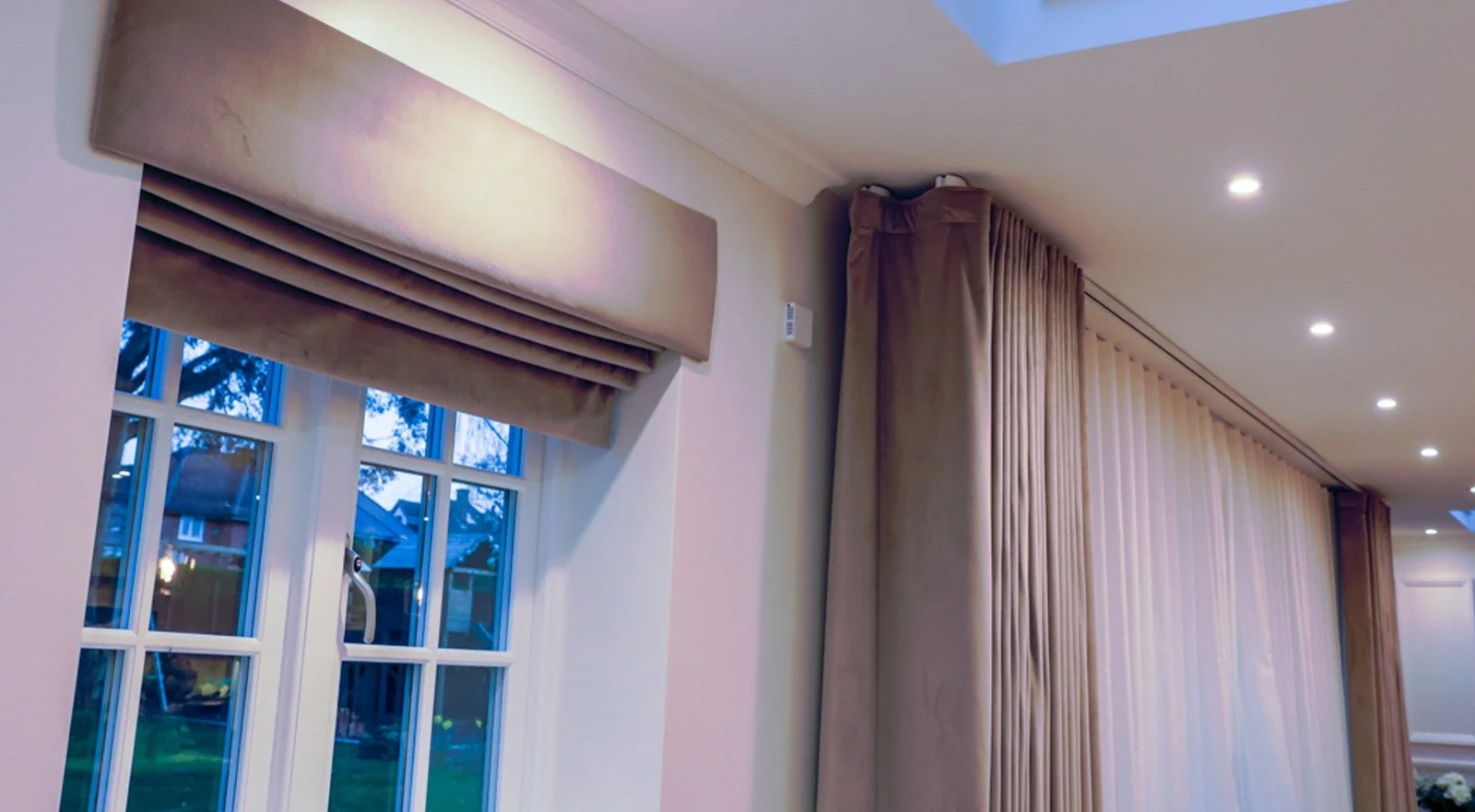
Automated blinds are another feature that's worth planning during the build.
The location of the windows, power requirements and control options can all be considered alongside the rest of the electrical work.
This can be particularly useful in rooms where you want to control light automatically, such as a home cinema or rooms with large amounts of glazing.
These types of window treatments are typically custom made, so need to be ordered ahead of time to avoid delays down the line. Planning them early also means you can avoid having to revisit finished walls and ceilings later.
Think about security
Security should also be considered before the house is finished.
Cameras, video doorbells, access control and other security equipment all benefit from being planned alongside the building rather than being added as an afterthought.
You can decide where cameras need to be positioned, where network connections are required and how everything can be integrated with the wider smart home.
For example, security events could be linked with lighting or notifications, giving you a system that works together rather than a collection of separate devices. It can be installed to protect the property even before move in day.
Plan where everything will live
It’s easy to concentrate on the things you'll see and forget about the equipment behind them.
A smart home can involve networking equipment, controllers, amplifiers and other hardware, so it's worth deciding where this will all go.
Having a dedicated, accessible location for your equipment can make the finished installation much neater. It also makes it easier to troubleshoot or upgrade things in the future.
This is something your installer can help plan before the build gets too far along.
Remember: You don't have to do everything at once
Planning for a smart home doesn't mean you have to install every possible feature on day one.
The important thing is making sure the house is ready for the technology you might want in the future.
For example, you might start with smart lighting, networking and a Control4 system, then add a cinema, automated blinds or additional audio later.
If the wiring and infrastructure have been considered from the beginning, those additions can be much simpler.
When should you speak to a smart home installer?
Ideally, before the electrical work and plastering have been completed.
Although… the earlier an installer is involved, the more opportunity there is to look at the plans and work out where cables, equipment, speakers, access points, lighting controls and other technology need to go.
This doesn't mean you need every detail decided immediately. It's more about making sure the important decisions are made while there is still time to change things.
A new house is a blank canvas, and that makes it one of the best opportunities to build the technology into the home properly from the start.
Smart home installation for new builds in York
At Vita AV, we can help plan the technology alongside your new build, from networking and pre-wiring through to Control4, lighting, audio, home cinema, blinds and security.
If you're building a new home in York or the surrounding area, get in touch to discuss your plans and how the technology can be built into the project from the beginning.